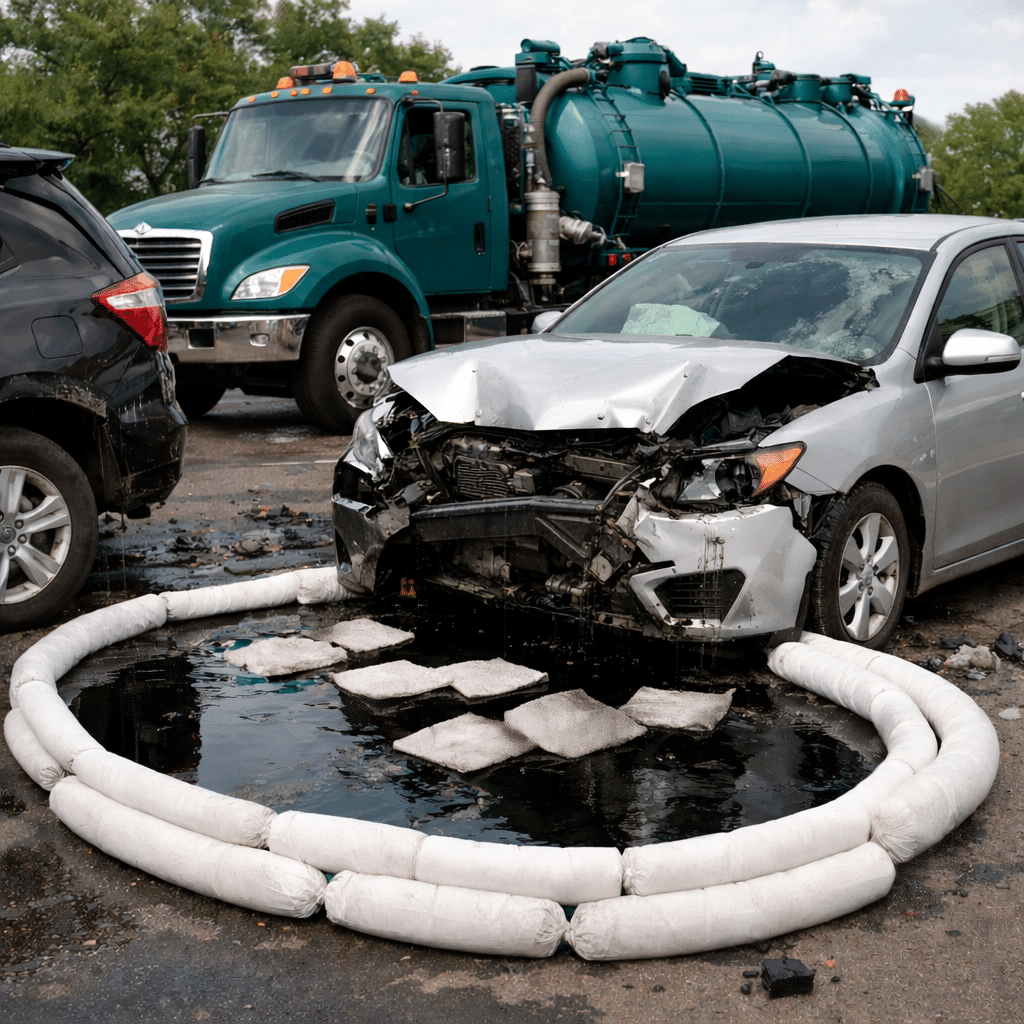
Oil Spill protection & Collection
All significant spills must be reported immediately to the 24-hour emergency line at 1-800-565-1633.
What to Do If You Have an Oil Tank Leak
Call your insurance company.
We can not self-deploy!
Land-Based/Homeowner Spills:
The homeowner is responsible for reporting spills to the Nova Scotia Department of Environment and Climate Change
(1-800-565-1633) and for hiring contractors to clean up.
Rapid detection and response are paramount to mitigating the spread of heating oil, which is toxic to soil, groundwater, and nearby water sources.
- Stop the Oil Flow: Close the shut-off valve at the tank and turn off the furnace power at the emergency switch.
- Ventilate: Open windows and use fans to blow fumes outside; oil vapours are dangerous.
- Clear the Area: Keep children, pets, and anyone not involved away from the leak.
- Shut Off Sump Pump: If oil enters a sump pump hole, turn the pump off immediately.
- Contain the Spill: Use sand, kitty litter, or rags to create barriers and absorb pooled oil; place a bucket under drips.
Immediate Safety & Containment
All significant spills must be reported immediately to the 24-hour emergency line at 1-800-565-1633.
Call your insurance company.
We can not self-deploy.
Accidents happen.
Please call your insurance first!
Site Control should be established by a qualified consultant to ensure the health and safety of all personnel in the spill area.
All significant spills must be reported immediately to the 24-hour emergency line at 1-800-565-1633.
Adequate oil spill protection at a crash site involves preparedness, immediate response actions, and safety measures to minimize environmental impact and ensure personnel safety.